A month-end inventory count tells you two things: what your stock is worth today, and, with last month's count and this month's invoices, what you used. That second number is cost of goods sold. This is the step-by-step version for a café, with a worked example. The free COGS calculator does the sum at the end.
Before you count
- Pick the moment. After close on the last day of the month, or before open on the first. Nothing should be sold or delivered between the count and the month's end.
- Print a count sheet in shelf order. Walk-in, dry store, bar, front. The free count sheet builder makes one, or use the count sheet template.
- Put away every delivery first. A case sitting by the back door gets counted twice or not at all.
- Gather the month's invoices. You need every delivery between the two counts, paid or not.
The count
- Count in the unit you buy in. Cases, bags, gallons. Count part-used ones as a fraction: half a bag is 0.5.
- Two people if you can. One counts and calls, one writes. It is faster and it catches skipped shelves.
- Count everything you would have to buy again. Coffee, milk, food, syrups, cups, lids. Leave out equipment and cleaning tools that last for years.
- Blank is not zero. If you did not count an item, leave it blank and go back. A zero means the shelf was empty.
Turn the count into a value
For each item: quantity counted × the price you last paid. Add the lines up. That total is your ending inventory.
Use the same price rule every month. If you switch between "last price paid" and "average price" from one month to the next, the result moves for reasons that have nothing to do with the shop.
Work out cost of goods sold
Cost of goods sold = Beginning inventory + Purchases − Ending inventory
- Beginning inventory is last month's ending count.
- Purchases is everything delivered during the month, at invoice price.
- Ending inventory is the count you just did.
A worked example
A café counted $4,200 of stock at the end of October. In November it took delivery of $9,800. At the end of November it counts $3,900.
4,200 + 9,800 − 3,900 = $10,100 cost of goods sold
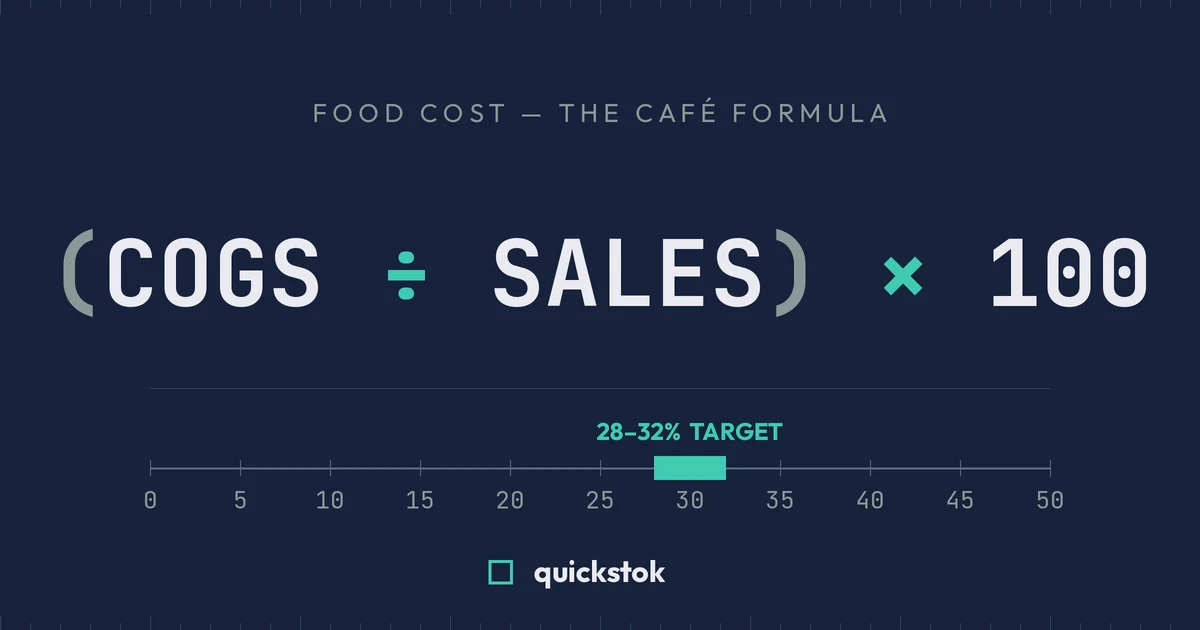
November sales were $31,000, so cost of goods sold was 10,100 ÷ 31,000 = 32.6% of sales.
When the number looks wrong
- It is negative. A delivery is missing from purchases, or the two counts used different units.
- It jumped from last month. Check for a shelf that was missed in one of the counts before you look for a real cause. A low count this month makes this month look expensive and next month look cheap.
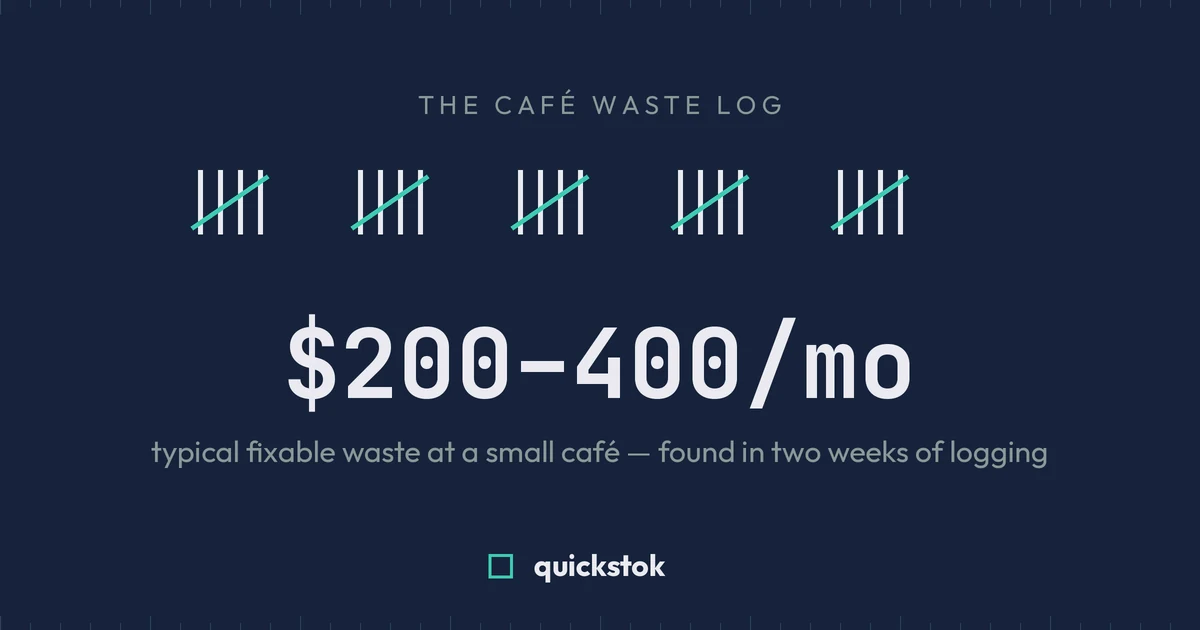
- It crept up over several months. Look at supplier prices first, then waste, then portions. A receiving log catches price rises; a waste log shows what was thrown away.
Doing it without the spreadsheet
The count is the slow part, and the sum is the part people get wrong.
In QuickStok, staff count on a phone with a link and a PIN, and prices come from the supplier receipts you photograph. After a count you see what your shelf is worth. With a count near each month end, it works out the month's cost of goods sold from the two counts and the receipts between them.
Two limits to know. An item with no receipt price yet is left out of the shelf value, so the figure can be low until your receipts cover it. And it shows dollars only: it does not hold your sales, so it does not show cost of goods sold as a share of sales. For that, put the figure and your sales into the COGS calculator.
It is free for one café, and it does not expire. No credit card.
Frequently asked questions
When should I do the month-end count?
After close on the last day of the month, or before open on the first day of the next. Pick one and keep it. What matters is that nothing is sold or delivered between the count and the end of the month.
What price do I value the stock at?
The price you last paid, from your most recent invoice for each item. Use the same rule every month, or the cost of goods sold will move for reasons that have nothing to do with the shop.
Do I count open bottles and half-used bags?
Yes, as a fraction: half a bag of beans is 0.5 of a bag. Decide once how precise to be (halves or quarters is enough for most items) and count the same way every month.
What is the cost of goods sold formula?
Cost of goods sold = beginning inventory + purchases − ending inventory. Beginning inventory is last month's ending count, purchases is everything delivered during the month, and ending inventory is this month's count.