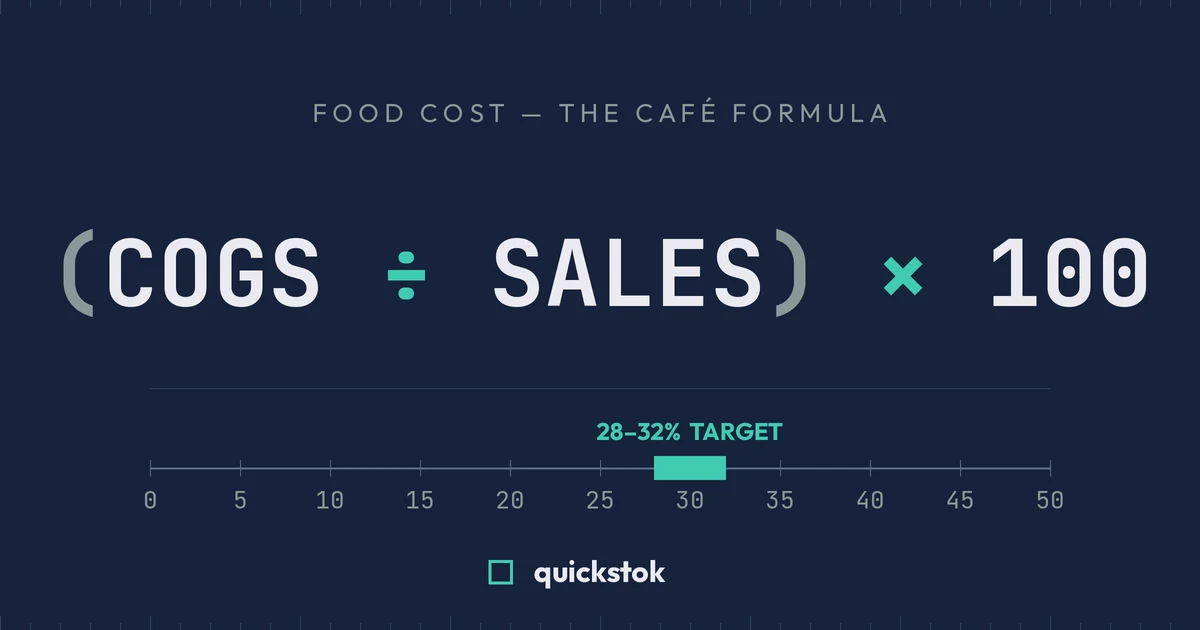
Food cost percentage is your cost of goods sold divided by your revenue, times 100 — and for a café, the number to beat is 28–32% overall. A $5.50 latte should cost you roughly $1.00–$1.35 to make, cup and lid included. This guide gives you the exact formula, three worked examples with real café numbers, and a free way to track it weekly without a spreadsheet marathon.
Want the number without the math? Our free food cost calculator turns your ingredients and menu price into food cost % and gross margin instantly.
What is the food cost formula?
There are two versions, and you need both.
Per-item food cost (for pricing decisions):
Item food cost % = (total ingredient cost ÷ menu price) × 100
Period food cost (for knowing if the café is actually profitable):
Food cost % = (Beginning Inventory + Purchases − Ending Inventory) ÷ Sales × 100
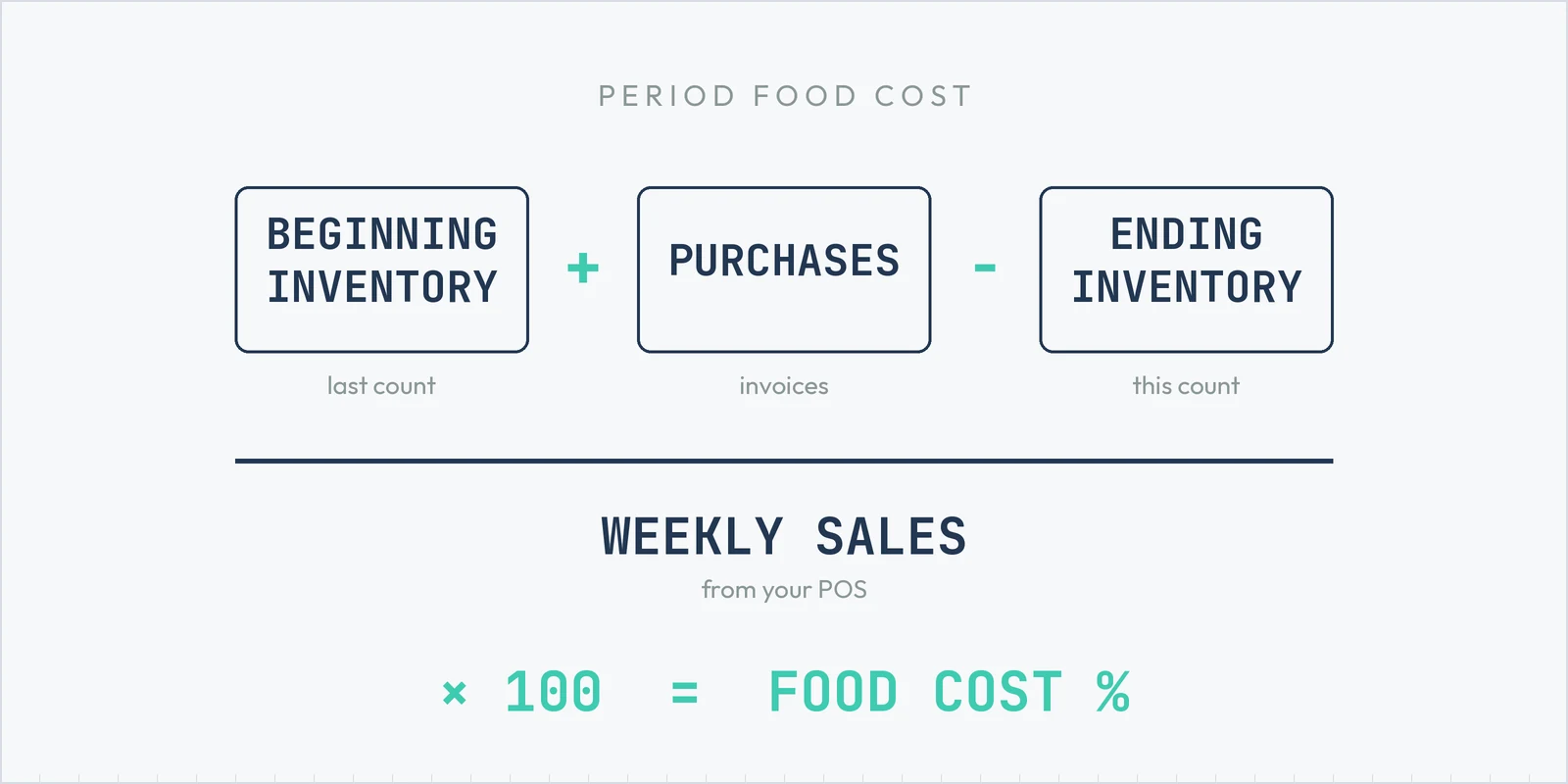
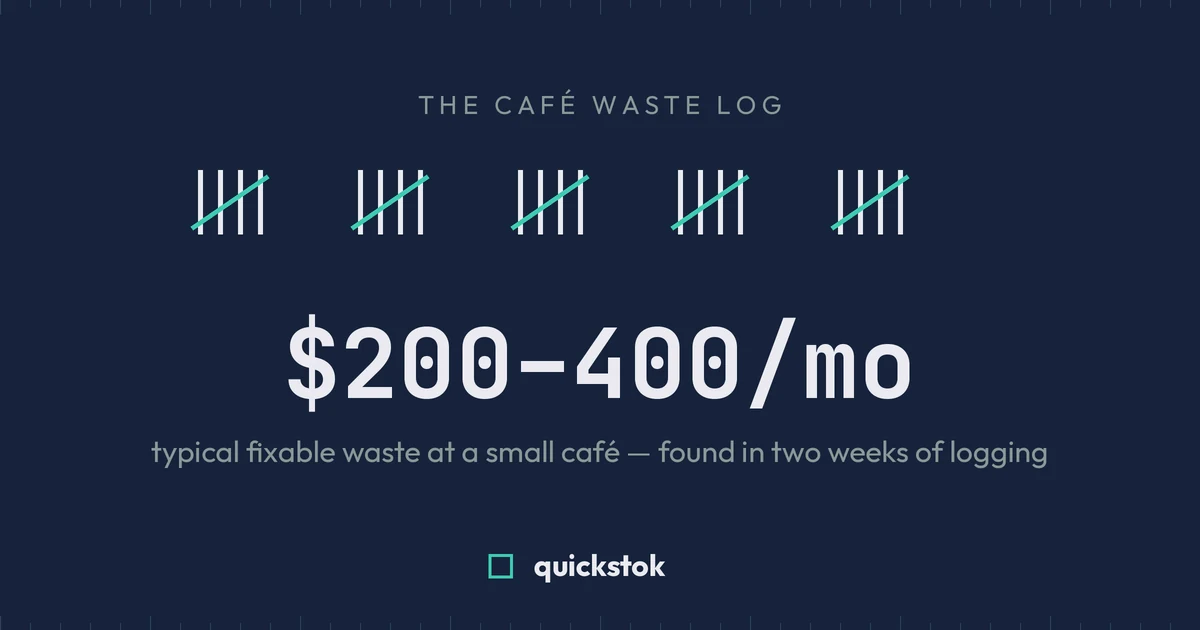
The period formula is the honest one. It captures everything the per-item math misses: waste, spills, over-portioning, staff drinks, and the oat milk that expired on the shelf. A café whose per-item math says 24% but whose period math says 33% has a nine-point leak — and that leak is usually worth $800–$1,500 a month at typical café volume.
The takeaway: per-item food cost tells you how to price; period food cost tells you the truth.
What should each drink actually cost? (worked examples)
Here is the math on three staples, using typical 2026 wholesale prices in a US metro. Your numbers will differ — swap in your invoice prices.
Example 1: 12oz latte, menu price $5.50
Food cost: $1.13 ÷ $5.50 = 21%. Healthy. Espresso drinks are your margin engine — this is why cafés survive on lattes.
Example 2: 16oz iced oat latte, menu price $6.75
Food cost: $2.45 ÷ $6.75 = 36%. This is the quiet margin killer: oat milk costs roughly 5× dairy per ounce, and most cafés charge only $0.75–$1.00 extra for it. If a third of your milk drinks are non-dairy, that alone can drag your blended cost up 2–3 points.
Example 3: Ham & cheese croissant, menu price $7.00
Food cost: $2.87 ÷ $7.00 = 41%. Food runs hotter than drinks everywhere — that is normal. The question is mix: if food is 20% of your sales at 41% cost and drinks are 80% at 22%, your blended cost is a healthy 25.8%.
The takeaway: price each item off its own math, then manage the blend — profitable cafés let 20%-cost lattes subsidize 40%-cost food, deliberately.
How do I calculate my café's overall food cost?
Three steps, once a week:
- Count what you have. End-of-week inventory count of everything that goes into products — beans, milk, syrups, pastry, packaging. This is your Ending Inventory (and next week's Beginning Inventory).
- Total what you bought. Sum the week's supplier invoices. Every delivery counts, including the emergency grocery-store milk run.
- Divide by what you sold. (Beginning + Purchases − Ending) ÷ Weekly Sales × 100.
If that number is 28–32%, you are in the pocket. Above 35% for two weeks running, something specific is wrong — see the next section.
The painful part has never been the division; it is step 1. A full count in a spreadsheet takes most café owners 60–90 minutes a week. Our free café inventory count sheet template cuts that down with a pre-structured sheet — and if you would rather skip the spreadsheet entirely, QuickStok turns the same count into a 15-minute phone task and computes your food cost automatically from counts plus AI-scanned receipts.
The takeaway: weekly period food cost = one count + one invoice total + one division.
Why is my food cost too high?
When the period number runs above target, the causes rank like this in real cafés:
- Supplier creep. Prices rise invoice by invoice — coffee and dairy especially. If you are not comparing per-unit costs across invoices, a 6% bean increase hides for months.
- Over-portioning. A barista pulling 20g doses instead of 18g inflates espresso cost 11% silently. Same for "generous" syrup pumps.
- Unlogged waste. Expired milk, burnt batches, dropped pastries. Untracked, it all lands in your food cost number looking like a mystery.
- The theoretical-vs-actual gap. Compare what your sales should have consumed against what your counts say you actually used. The gap is your leak, itemized. This comparison is tedious by hand and is exactly the kind of math inventory software does for you — QuickStok flags the top variance items automatically after each count.
The takeaway: high food cost is almost never one big problem — it is supplier creep plus portioning plus waste, and you fix it by measuring weekly, not by guessing.
Food cost benchmarks for cafés (quick reference)
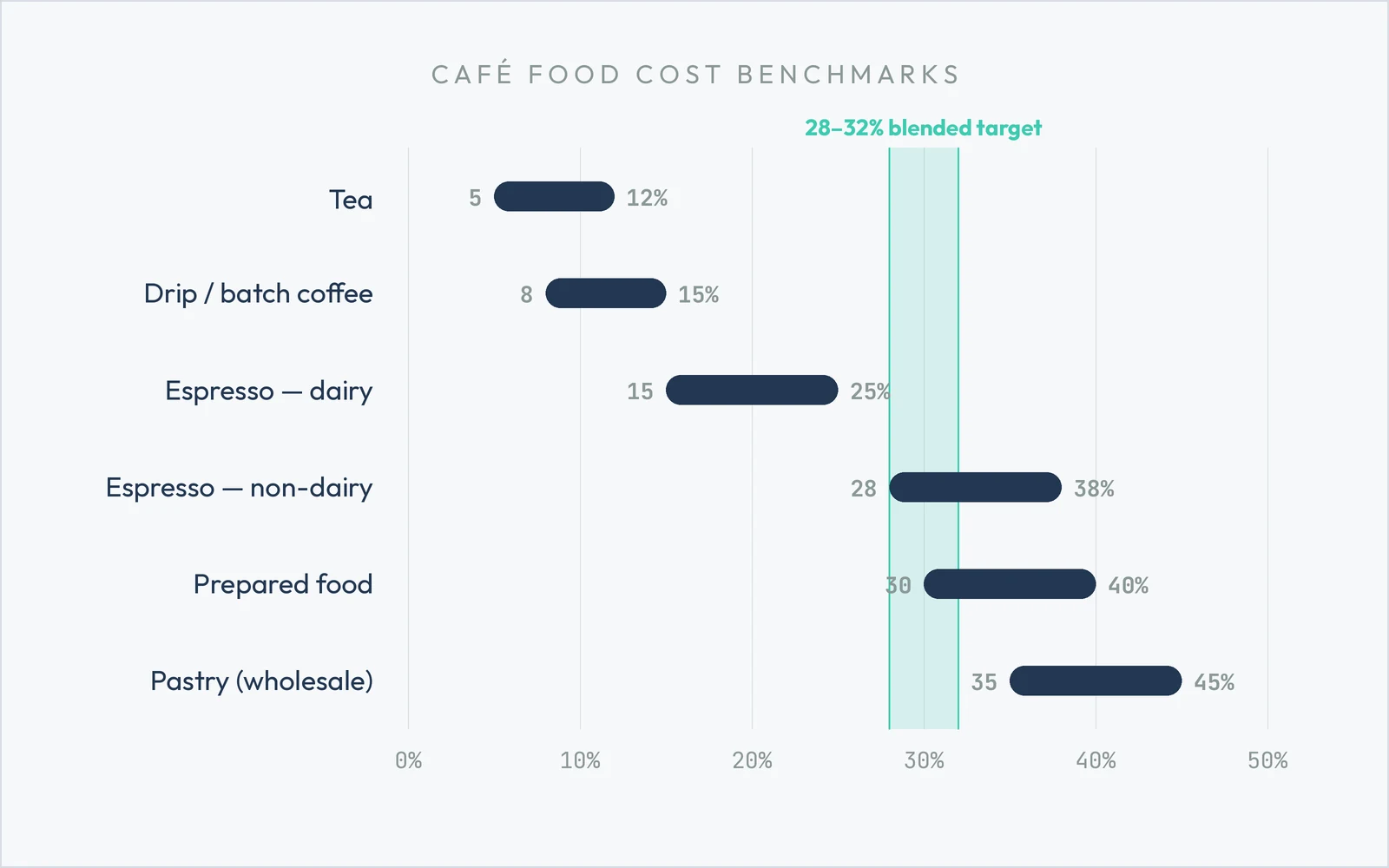
Start with one number this week
You do not need software to start — you need one honest period calculation. Do one count, total one week of invoices, divide by one week of sales. If the answer surprises you, that surprise is worth more than any benchmark table.
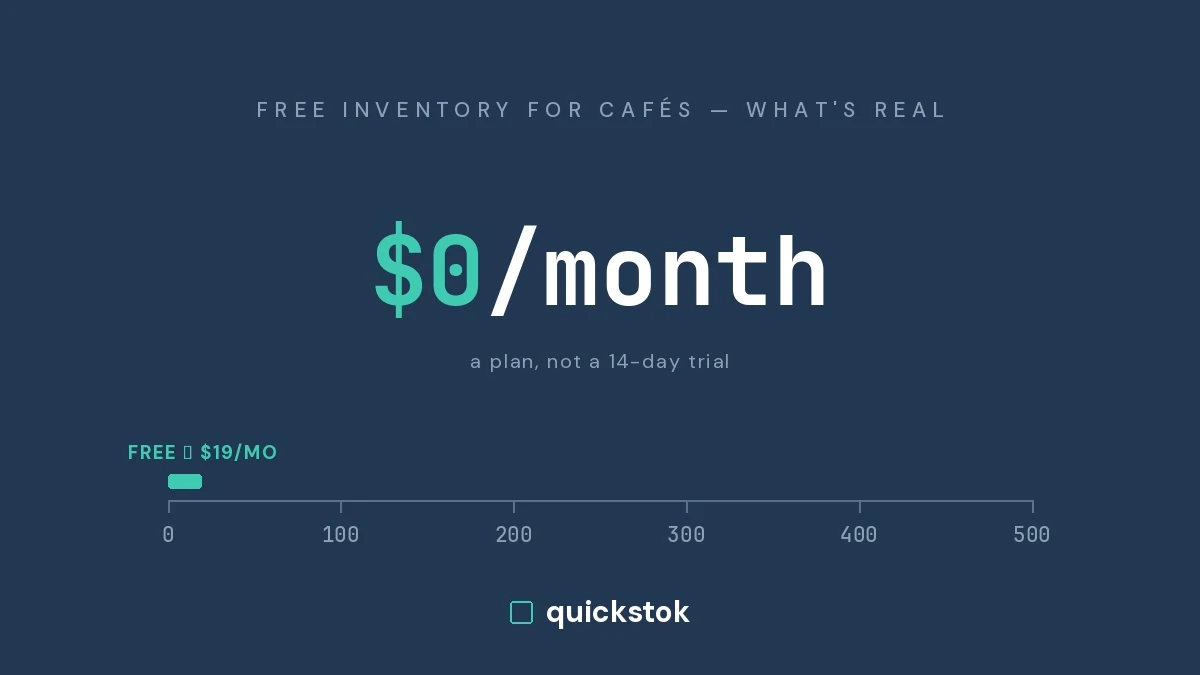
And when the weekly count becomes the bottleneck, that is the problem QuickStok was built for: phone-based counts your staff can do in 15 minutes, receipt scanning that tracks supplier prices per unit, and food cost that computes itself. Free to start, $19/month for Pro, no contract — see how it works.