Starbucks spends over $1 billion annually on technology, including a proprietary AI platform called Deep Brew that forecasts demand for every store based on weather, local events, and historical patterns. In 2025, they deployed NomadGo's Inventory AI across all 11,000+ North American locations, making inventory counted 8x more frequently than manual processes allowed. The technology gap between chains and independents used to be unbridgeable — but in 2026, the core capabilities that power these systems are available to any café owner for a fraction of the cost.
What Starbucks actually built (and what it costs)
Let me tell you what Deep Brew actually does, because the press releases are vague and the reality is more interesting.
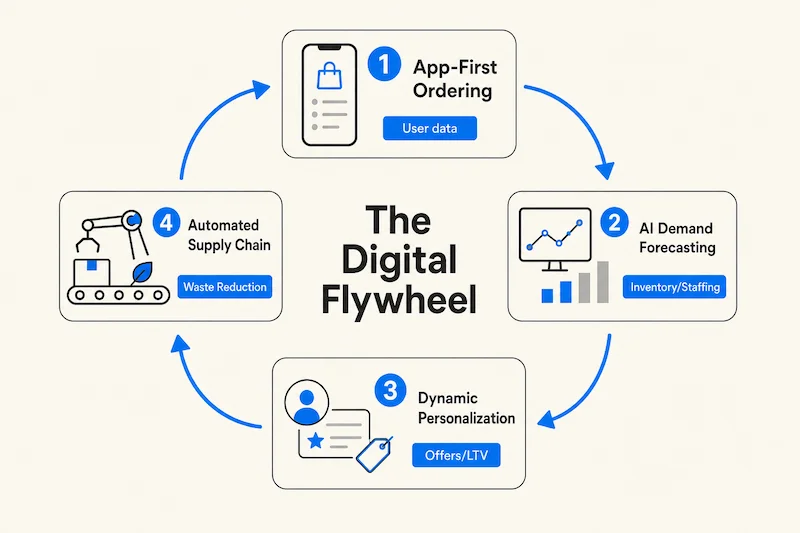
Deep Brew is Starbucks' proprietary AI platform — not purchased from a vendor, but built in-house at significant cost. According to public earnings calls and press coverage, it analyzes sales data from every store, layered against weather patterns, local events, and historical trends. Not "it's summer, sell more cold brew." More like: at this specific store, on rainy Tuesday mornings, oat milk demand runs 22% above the weekly baseline, and that spike starts at 7:15am rather than 8.
That granularity matters because it drives restocking decisions automatically. Deep Brew doesn't just surface data — it reportedly tells each store what to order and when. The manager approves, but the calculation is already done.
On top of that, Starbucks deployed NomadGo's Inventory AI across all 11,000+ North American company-operated stores, reportedly completed by September 2025. NomadGo uses computer vision to count inventory — cameras and image recognition instead of staff manually scanning shelves. According to Starbucks, the result is inventory counted approximately 8x more frequently than their previous manual process allowed. For a chain at that scale, that's the difference between weekly visibility and near-daily visibility on every item, in every store, simultaneously.
CEO Brian Niccol, who took over in 2024, made fixing inventory and supply chain gaps a core pillar of his turnaround strategy. The subtext in every earnings call: inaccurate inventory was costing Starbucks real money in waste, stockouts, and customer disappointment. A company that size doesn't spend nine figures on technology because it's interesting — they spend it because the ROI is documented and material.
Starbucks hasn't published an exact technology budget, but their overall technology investment is regularly referenced in earnings materials as exceeding $1 billion annually. For context: that's more than most independent cafés will gross across their entire operating life.
The Blue Bottle advantage (and what they just lost)
Blue Bottle Coffee was acquired by Nestlé in 2017, which gave their roughly 100 locations access to something most independent café owners will never see: Nestlé's enterprise SAP infrastructure.
SAP is the enterprise resource planning software that powers supply chain operations at some of the largest companies in the world. For Blue Bottle, Nestlé's ownership meant access to AI-driven supplier contract analysis, automated procurement optimization, demand forecasting built on decades of consumer goods data, and supply chain modeling technology that can simulate warehouse and delivery scenarios before you commit to them.
In plain terms: Blue Bottle's supply chain team had an enterprise supercomputer running their ordering decisions. Independent cafés have a notepad and a supplier rep's cell number.
Here's the twist: Nestlé sold Blue Bottle to Centurium Capital in April 2026.
That sale ends Blue Bottle's access to the Nestlé enterprise tech backbone. Approximately 100 locations are now back on their own — needing to build or buy a technology stack from scratch, facing the same "what do we actually use for inventory?" question that every independent café owner eventually confronts.
There's something almost poetic about it. Blue Bottle, which spent years positioned as the artisan antithesis to chain coffee culture, got acquired, got the chain-scale enterprise tech, and is now being divested into exactly the same problem they started with. They're about to find out what independent operators already know: the enterprise advantage disappears the moment the corporate parent does.
The 5 things chain technology actually does
Strip away the branding. Pull back from the specific vendor names. Every major chain's technology stack — Deep Brew, SAP, NomadGo — boils down to the same five functions.
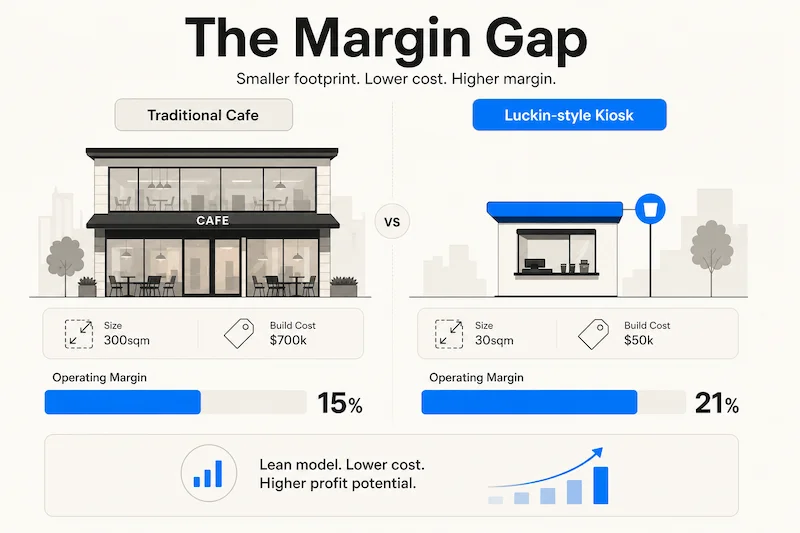
1. Counts inventory accurately and frequently. Starbucks went from manual weekly counts to AI-assisted near-daily counting across 11,000 stores. The frequency is the advantage, not the method. Manual counting once a week means you can run out of something on a Tuesday and not catch it until the following Monday. Frequent, accurate counting surfaces problems while there's still time to fix them.
2. Predicts demand from actual data. Not "I think we need more oat milk this weekend." Specific: based on 52 weeks of sales history, your oat milk usage is 8 cartons on an average Tuesday, but it climbs to 12 on rainy Tuesdays, and spikes in the two weeks after you run any oat-forward seasonal special. Par levels built from that data are fundamentally different from par levels built from memory.
3. Generates orders automatically. The system compares what you have against what you're projected to need and produces a supplier order. The human reviews and approves it — but the calculation isn't done in their head, on a notepad, or in a spreadsheet. Starbucks managers aren't calculating orders; they're approving them. That's the operational difference.
4. Tracks waste in real time. Not "we threw away some milk this week." Specific: you discarded 4.2 gallons of 2% milk this week, up from 3.1 last week, with most discards on Monday mornings following weekend over-ordering. That specificity is what enables action. Vague waste awareness doesn't change behavior; a line item on a weekly report does.
5. Connects sales to inventory. POS data flows into inventory automatically. When you sell 200 lattes, the system knows that consumed approximately 50 gallons of milk — without anyone entering it manually. That feedback loop is what makes demand forecasting work. Without it, you're running two separate data sets and reconciling them in your head every week.
These five functions are the actual competitive advantage. Everything else — computer vision hardware, digital twins, Nestlé's SAP deployment — is implementation detail built on top of them.
What you'd actually spend to match Starbucks
You won't match Starbucks. Let's be clear about that. You're not deploying NomadGo cameras across 11,000 locations, and you're not building a proprietary AI on a decade of granular per-store data.
But the five core capabilities above? Those are accessible right now.
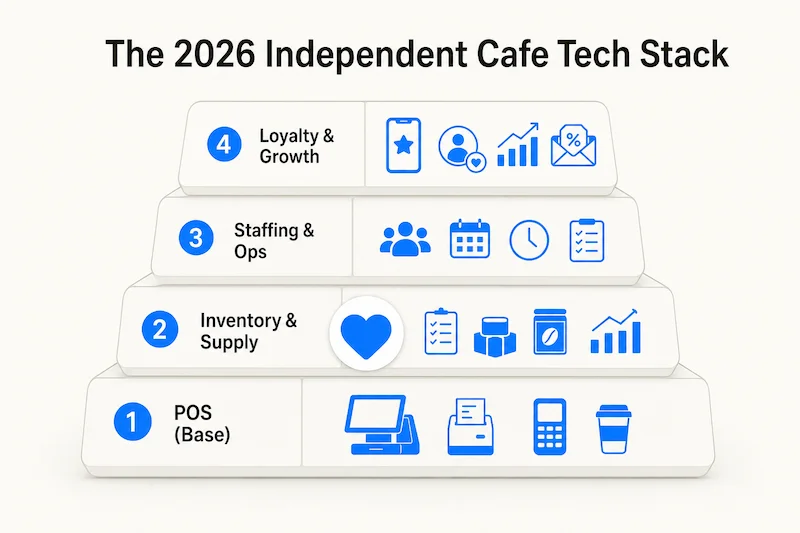
Here's a realistic stack for an independent café:
POS with sales data: Square Free or Toast Starter. $0 to $79/month. If you don't have a modern POS, this is step zero — the sales data feed is what powers everything downstream.
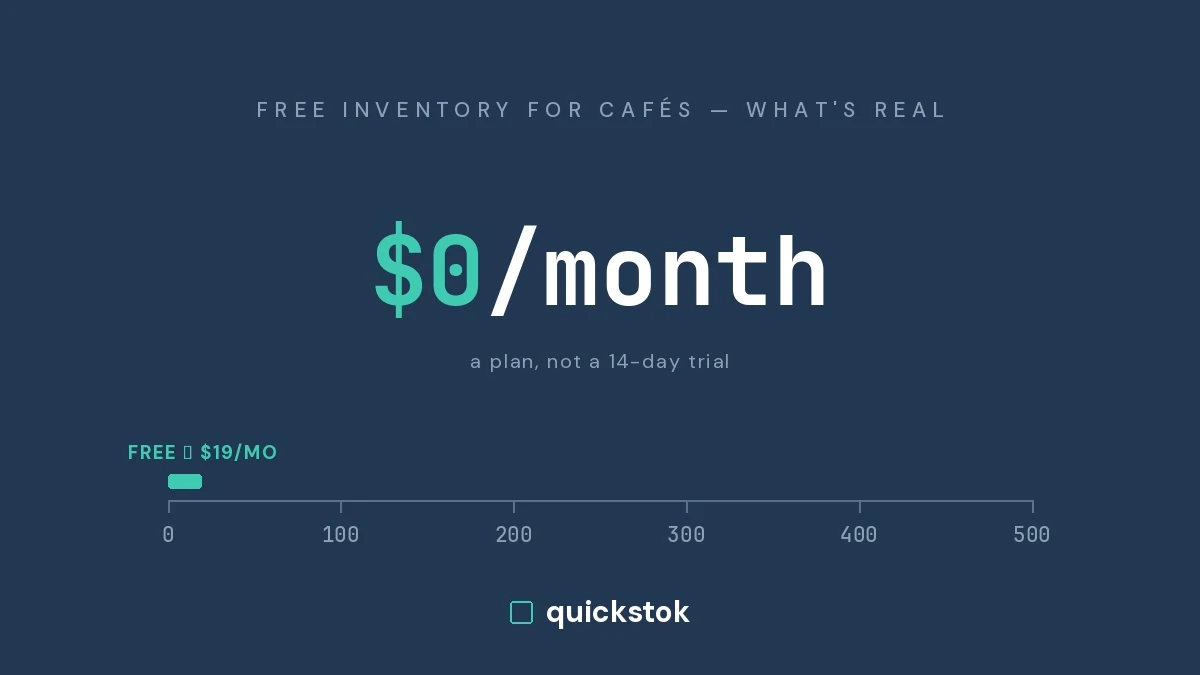
Dedicated inventory with AI ordering: QuickStok. Free plan, or $19/month for Pro. Handles AI-suggested par levels, supplier-grouped order sheets built from your counts, staff counting via phone, and receipt scanning that pulls line items straight into inventory without manual data entry.
Labor scheduling: 7shifts or Homebase. $0 to $34/month depending on team size.
Accounting: QuickBooks or Wave. $0 to $25/month.
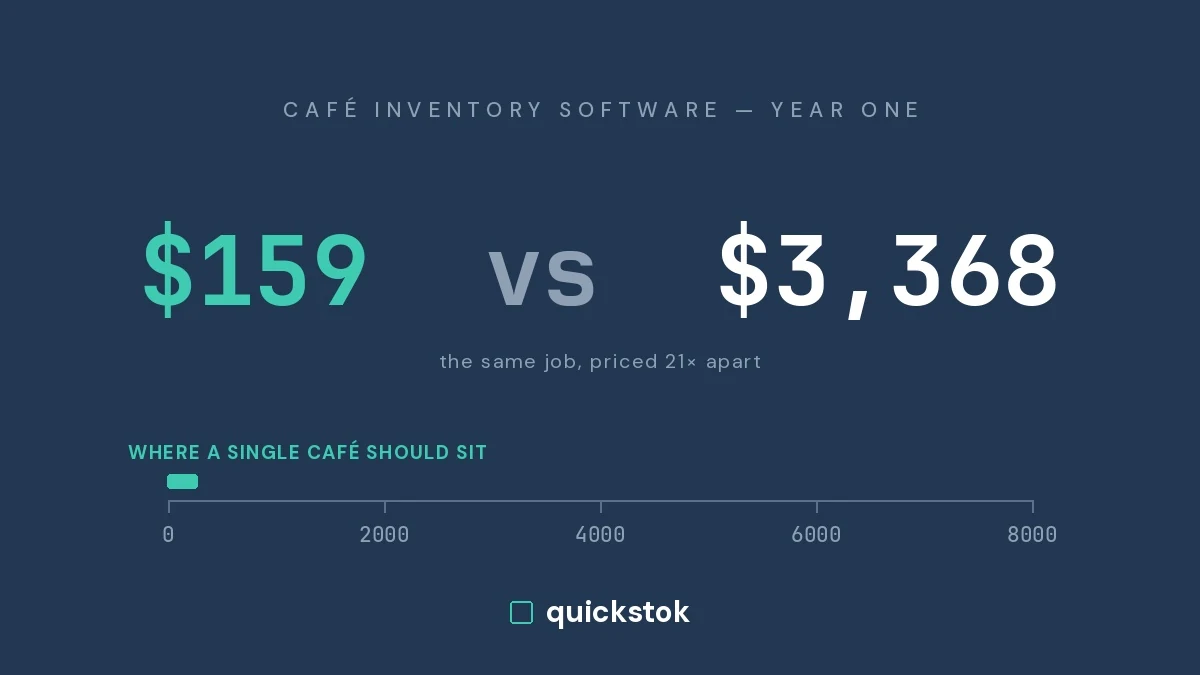
Total: $19 to $157/month. Against Starbucks' $1B+ annual technology investment.
You don't get computer vision counters. You don't get a digital twin of your walk-in. But you get the five core capabilities that actually move the margin needle — accurate counting, data-driven demand prediction, automatic order generation, real waste tracking, and a sales-to-inventory connection. The gap between chain and independent isn't the technology; it's whether you use it.
Why most cafés don't do this (and what it costs them)
I've talked to a lot of café owners. The resistance usually takes one of three forms.
The spreadsheet trap. "I have a system, it works." The spreadsheet does work — until it doesn't, and often you don't realize it's not working until a supplier change never got updated, or you notice your par levels are from two years ago and your volume has shifted 40%. The hidden cost of a manual spreadsheet system is the 3–5 hours per week of owner time required to maintain it. At $30/hour of your attention, that's $400–600/month in bandwidth — the spreadsheet is free, but the time it consumes isn't. For a detailed look at where spreadsheets break down specifically, see café inventory: spreadsheets vs. AI tools.
The "I know my business" trap. You do know your business — and your intuition is accurate maybe 70% of the time. That 30% where it's not represents either over-ordering (waste, tied-up cash) or under-ordering (stockouts, disappointed customers, lost revenue). For a café doing 150 drinks a day, that 30% often runs $200–500/month in direct costs. The guide to cutting waste and over-ordering walks through how to put a real number on this for your specific operation.
The complexity trap. Managing 50+ items across 3 suppliers with memory and a notebook is a cognitive load problem disguised as an operational one. It feels manageable until it isn't — and "isn't" usually surfaces as a Thursday out-of-oat-milk situation that costs you an afternoon of latte revenue and ends with a trip to the grocery store on your way home.
The realistic cost of no system: $200–400/month in over-ordering waste, $50–100/month in preventable stockout losses, and 3–5 hours per week of owner time. That's before the emergency Instacart orders.
How to build your café's tech stack this week
You don't need to buy everything at once. Here's the sequence that works.
Step 1: Get a modern POS if you don't have one. Square's free tier gives you sales data, which powers everything downstream. Without it, you're estimating demand from memory instead of calculating it from history.
Step 2: Start tracking your top 20 items. Not your full item list — twenty items by monthly cost. In most cafés, those 20 items represent 80% of total ingredient spend. That's where your leverage is.
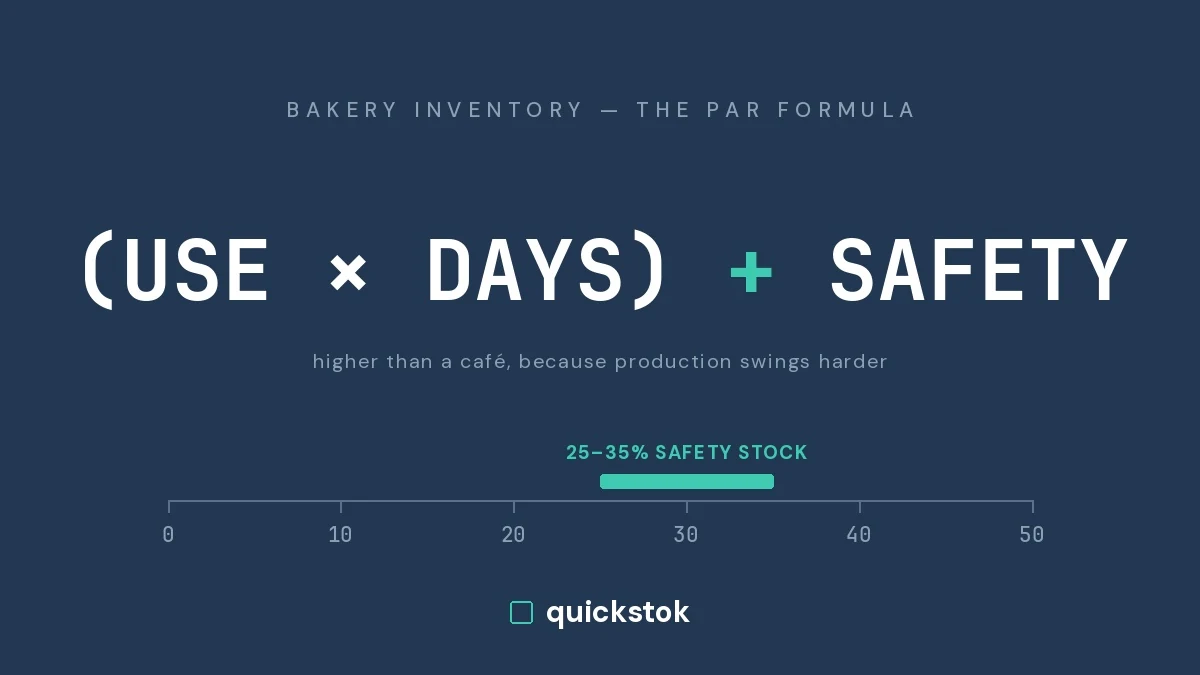
Step 3: Set par levels from actual data. Use real usage numbers, not intuition. The formula — daily usage × days between deliveries + safety buffer — takes about two minutes per item once you have four weeks of count history. The par level guide walks through this with real examples.
Step 4: Automate your order generation. Stop building orders from memory. When a count drops below par, the order should be nearly automatic — the system calculates the quantity, groups it by supplier, and you review and approve. That's the jump from reactive to proactive.
Step 5: Track waste explicitly. Even a simple log — item, quantity, reason, date — changes behavior within a few weeks. When waste is visible and named, it gets managed. When it's invisible, it accumulates.
The complete café inventory management guide covers all of this in more depth, including how to build a consistent counting habit with your team and what to do with the data once you have it.
The gap has closed
The technology that Starbucks spent years and hundreds of millions of dollars building exists in accessible form right now. Deep Brew's core insight — demand is different by store, by weather, by day of week, by local context — is a calculation any inventory system can run with twelve weeks of count data. NomadGo's core function — count more frequently and more accurately — is something any café can replicate with a phone-based counting app and a consistent weekly habit.
What used to require a proprietary AI platform and enterprise hardware now runs for the price of two bags of specialty beans per month. The only question is whether you'll adopt it before or after your competition does.
If you're ready to start, the getting-started guide covers the full setup in about 30 minutes — and it's free to start.